Broom Finish Concrete vs Other Finishes in Brevard County
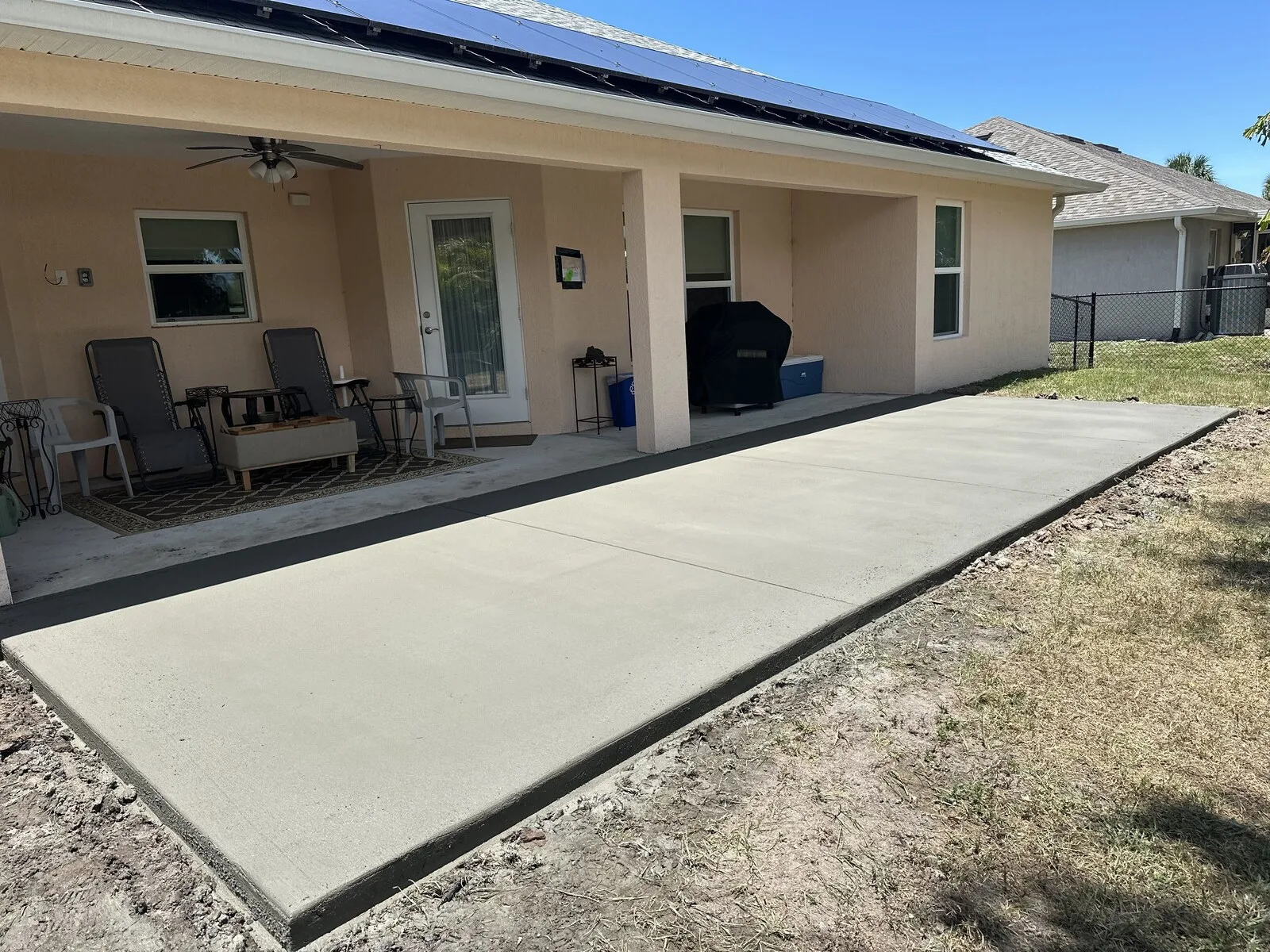
Broom finish concrete is the right pick for most driveways and patios in Brevard County. A broom dragged across the wet slab leaves fine lines that grip in the rain. The other finishes fit narrower jobs, like a slab that stays dry or a pool deck in full sun.
Broom finish is the standard on the concrete driveways we pour. We also do smooth trowel slabs and stamped pours. Over sound old concrete, we put down a knockdown spray texture. Every finish your slab can take gets priced at the same free on-site estimate.
Why is a broom finish the standard for Brevard driveways?
Grip is the reason. Concrete spec writers treat a slip resistant surface as a safety requirement on outdoor concrete. A broom finish is the most common way to meet it. That matters here, where summer afternoons bring rain most days.
The concrete gets poured and screeded flat, then takes a broom finish before it sets. The broom leaves fine lines in the concrete itself. Some people call the result brushed concrete. It is also the easiest finish to clean and to patch years later.
Timing is the skill. The broom goes on while the slab is still soft, after the bleed water is gone. Brush too early and the surface ends up weak. Brush too late and there is not enough texture.
Depending on the weather, that wait runs anywhere from 20 minutes to 4 hours. In summer we start early, because a hot slab stiffens before the finish is done.
Which direction should a broom finish go?
Across your path. Paving specs call for the broom to run across the line of traffic. On a driveway, the broom typically runs from side to side without stopping. Fine lines pulled across the wet surface give tires and shoes grip in the rain.
Slope points the same way. One concrete guide says to run the broom across the slope, if there is one. Water has to run away from the garage door, so we pitch the slab toward the street. Side to side broom lines then cross that slope.
Drains change the rule. Where a slab has to carry water to a drain, the same guide runs the broom marks toward the drain.
Light or heavy broom: how much texture do you need?
Broom finish concrete comes in grades of texture. Concrete brooms come in different stiffnesses to produce different textures. A soft broom leaves a uniform, fine-line texture. In one paving spec, a stiff broom cuts grooves a sixteenth to an eighth of an inch deep.
Texture is a trade. Heavy textures grip well but feel rough on bare feet. One concrete guide lists rough on bare feet as a broom finish downside. That matters most on a back patio or around a pool. Ask about the texture before the pour, since the broom goes on while the slab is still soft.
When does a smooth trowel finish make sense?
Troweling produces a hard, smooth, dense surface. It looks cleaner than broom lines, and we pour both finishes on concrete patios. The catch is water. A smooth trowel finish turns slick under bare feet when it rains.
Concrete guides do not suggest hard troweled surfaces outdoors, since they become slippery when wet. A broom finish is just as durable as a smooth one. Choosing grip gives up nothing in wear.
That leaves the smooth trowel finish for a slab that stays dry, like one under a solid roof. Wherever summer rain or pool water lands, a broom finish is the safer pick.
Is a stamped finish slippery when wet?
It can be, and the sealer decides most of it. Stamped concrete is a pattern pressed into a new pour before it sets. We stamp ashlar slate, flagstone, brick and wood plank patterns, then seal the surface.
Slip resistance on a stamped surface depends largely on the sealer used. Water tends to bead up on sealed decorative concrete, which can make it slick. A clear grit mixed into the sealer makes the surface less slippery. Our sealer goes on with a grit additive for that reason.
Upkeep follows the sealer. Plan on a fresh coat about every six years, sooner on a slab in full sun all day. Beachside homes in places like Satellite Beach take salt air every day, and salt air pulls at sealer.
You can also mix the two finishes. A stamped border along the edges or across the apron adds pattern while the field stays broom finish.
When is a knockdown spray texture the better fit?
It fits when the concrete you have is sound and you want a new surface on it. A knockdown spray texture is a cement-based coating sprayed onto existing concrete. A trowel then flattens the peaks for a smoother finish.
We put it on pool decks, patios, lanais, walkways and entries. The same finish can go on a driveway slab. The highly textured surface is slip resistant. In a light color, it also helps with heat underfoot.
On a new concrete pool deck, the slab can take a broom, a knockdown spray texture or a stamped pattern. Pool decks land in the middle on texture, with grip for wet feet and less roughness than a heavy broom.
The slab under any coating has to be sound. Concrete that is heaving or has severe cracks is not a resurfacing candidate. No finish saves that slab. It comes out first, and concrete removal starts the rebuild.
How long before you can walk or drive on each finish?
A broom or smooth trowel slab needs at least 24 hours before anyone walks on it. On a new concrete driveway, cars can park after about seven days. A loaded truck or a dumpster waits the full 28 days.
A stamped finish needs about another day before foot traffic, so the release agent can be rinsed off first. Curing starts right after finishing and should continue for typically 3 to 7 days. Afternoon storms can pit a fresh surface, so we watch the radar and move a pour rather than risk it.
A knockdown spray texture goes over concrete that has already cured. Light foot traffic is usually fine after about 48 hours, and furniture goes back after roughly three days. Rain during the cure can push those days out.
Frequently Asked Questions
Is broom finish concrete slippery when wet?
A broom finish grips better than a smooth trowel finish, since the broom lines add a slip resistant texture. Lines that run across your path give shoes and tires grip in the rain. Any concrete can still get slippery when wet. Sealed decorative concrete can be slicker, because water tends to bead up on it.
What is the difference between a broom finish and a smooth finish?
Both start as the same poured slab. A broom finish gets a broom pulled across the soft surface, which leaves fine lines with grip. A smooth trowel finish gets troweled into a hard, dense surface that looks cleaner. The smooth one turns slick when wet, and the broom finish wears just as well.
Can a broom finish concrete driveway have color?
Yes. Integral color mixes pigment into the concrete, so the shade runs through the whole slab instead of sitting on top. A stamped border along the edges or across the apron is the other common upgrade. Either way, the field keeps its broom lines and their grip.
Which concrete finish stays coolest around a pool?
Color drives most of the heat. Lighter shades reflect more sun, while darker shades absorb more heat. A knockdown spray texture in a light color helps with deck heat. Its small peaks also cut down how much of your foot touches hot concrete at once.